
Drain Cleaning · Edgewater, FL
Slow Sink, Tub or Floor Drain in Edgewater, FL? Drain Cleaning Services and How to Tell How Deep It Goes
A sink that drains slowly, a tub that backs up or a floor drain that gurgles all have one thing in common: something is slowing the water. The job starts with learning how far the problem reaches.
One slow drain or the whole house? Find out first
Before you reach for a plunger or a cleaner, work out how far the problem reaches. Where the clog sits decides who you call and what the job is.
| What you see | Where the clog likely is | What to do |
|---|---|---|
| One sink or tub drains slowly, others fine | In that fixture's own drain | Plunge, then call if it returns |
| Two fixtures on the same bathroom are slow | In the branch line they share | Call and say which fixtures |
| Toilets bubble when the tub drains, several drains slow | In the main line | Check the cleanout and call |
| Sewage in a tub or floor drain | Main line fully blocked | Stop using water and call now |
If the main line is the problem, it is more than a drain job. See main sewer line problems for what a camera should show and who owns which pipe.
Plunger, hand removal and why to skip chemical drain cleaners
- Use a plunger. Block the overflow opening on a sink or tub, and use a plunger with a firm seal.
- Remove what you can see. Hair in a tub drain or a sink stopper can often be pulled out by hand or with a drain tool.
- Skip harsh chemical drain cleaners. They can damage pipes and fixtures, and they are a hazard to whoever opens the drain next.
- Stop if it gets worse. If water backs up elsewhere or the drain does not clear, call rather than force it.
A clog that comes back within days is not a plunger problem. Something farther down the line is catching waste, and cleaning it once may not solve it.
Call Edgewater FL Expert Plumbers, say which fixtures are affected and what you have tried.
How a plumber clears a drain, from least to most work
Hand tools and plungers
For a simple clog near the fixture, hand tools may be enough. This is the quickest and least disruptive option.
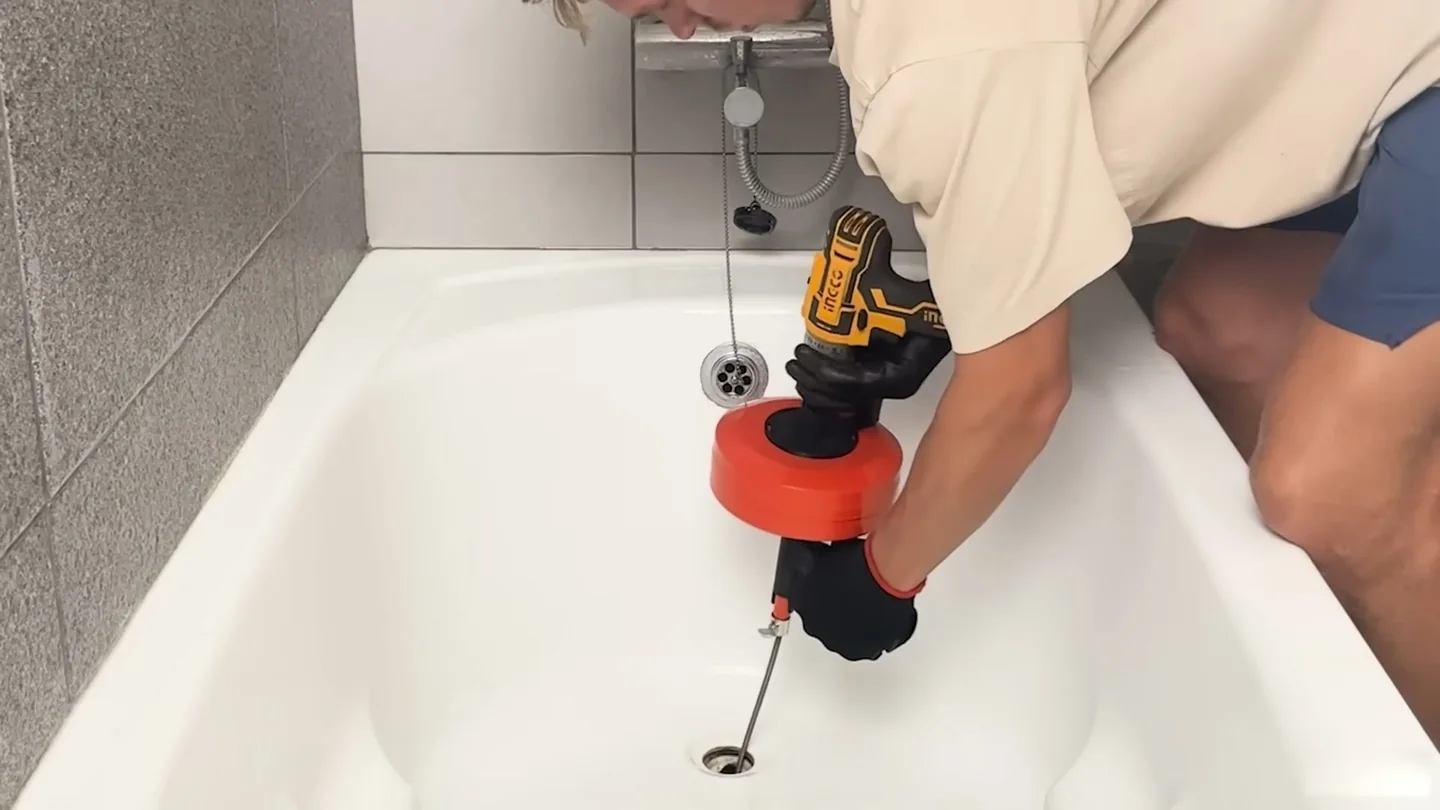
A motorized cable
A rotating cable is sent into the line to break through a clog and pull it back. It suits clogs in branch lines and cleanouts. A cable opens a path through the clog but may leave buildup on the pipe wall.
Camera inspection
When a drain keeps clogging, a camera shows what is in the line and whether the pipe is damaged. Ask to see the footage, and ask what it shows about the condition of the pipe.
Jetting
High-pressure water scours the pipe wall, which suits grease and scale. If the same line keeps clogging, jetting for repeat clogs is worth asking about.
Kitchen sinks, disposals and grease
Kitchen lines clog differently from bathroom lines. Fats and oils cool and coat the pipe wall, and food scraps add to it. If a disposal is also involved, check whether it is jammed or leaking. A jammed disposal can look like a drain clog and needs a different fix.
- Do not pour grease down the drain. Let it cool and put it in the trash.
- Run cold water while the disposal is working and for a short time after.
- Avoid fibrous or starchy scraps, such as celery and potato peels, in the disposal.
Toilets that will not flush or keep clogging
A single toilet that clogs once is usually a fixture matter. If it clogs repeatedly, or other fixtures react when you flush, the problem is deeper in the line. A clogged toilet that has a weak flush or runs afterward may have a mechanical fault too, which is a repair, not a cleaning.
Keeping drains clear: habits that matter by fixture
- Bathroom sinks and tubs. A hair catcher in the tub and a stopper strainer in the sink catch most of what causes slow drains.
- Kitchen sinks. Wipe greasy pans before washing, and keep coffee grounds and starchy scraps out of the drain.
- Laundry. A lint trap on the washer hose catches fibers that build up in the standpipe and the line beyond it.
- Toilets. Flush only toilet paper and waste. Wipes sold as flushable often are not, and they are a common cause of main line clogs.
These habits do not fix a pipe that is already narrowed, but they slow the rebuild. If a drain is clean after service and slows down again within weeks, the habits are not the cause, and a camera look is the next step.
Floor drains and laundry standpipes
A floor drain that gurgles or smells is often telling you something. A dry trap can let sewer gas into a room, and pouring water into the drain refills it. A floor drain that backs up when the washer drains points to a blockage in a line that serves the laundry area. Say which of these is happening when you call, so the right tools come.
Yard drains, outdoor drains and stormwater
Drains outside the house are a separate matter. A clogged yard drain, a gutter downspout drain or a driveway drain carries rainwater, not household waste. The City of Edgewater bills stormwater on its utility bill, and its customer line is 386-424-2400, extension 4000. Ask the utility whether a drain in the street or right of way is the city's, and which drains on your lot are yours.
A plumber can clear drains on your own property. We cannot say how Edgewater divides ownership of a given drain, so confirm with the utility before paying for work on anything near the street.
Business and restaurant drains
Commercial drains get heavier use, and food service lines clog from grease. If your business has a kitchen, ask the City of Edgewater utility whether a grease rule applies. We could not find a published requirement to cite. For issues that affect a whole building, see business drains for what to ask on a service call.
What to ask a plumber after a drain call
- Where was the clog, and what was it?
- Was a camera used, and what did it show about the pipe?
- Is this likely to return, and why?
- Does the line need jetting or a repair, not another cleaning?
- What should I change at home to keep it clear?
A drain cleaning should leave you with an answer to the second and third questions, not only a clear drain. If the same drain needs cleaning every few months, the cause has not been found.
Tell us which drains are slow and what you have tried
Say which fixtures are affected, how long it has been going on and whether anything has backed up.