
Leak Detection · Edgewater, FL
High Bill or a Running Meter in Edgewater, FL? Water Leak Detection From the Meter Test to the Source
A water bill that jumped, a meter that will not stop turning or a stain with no obvious source all call for the same first step: finding out whether there is a leak, and where it is.
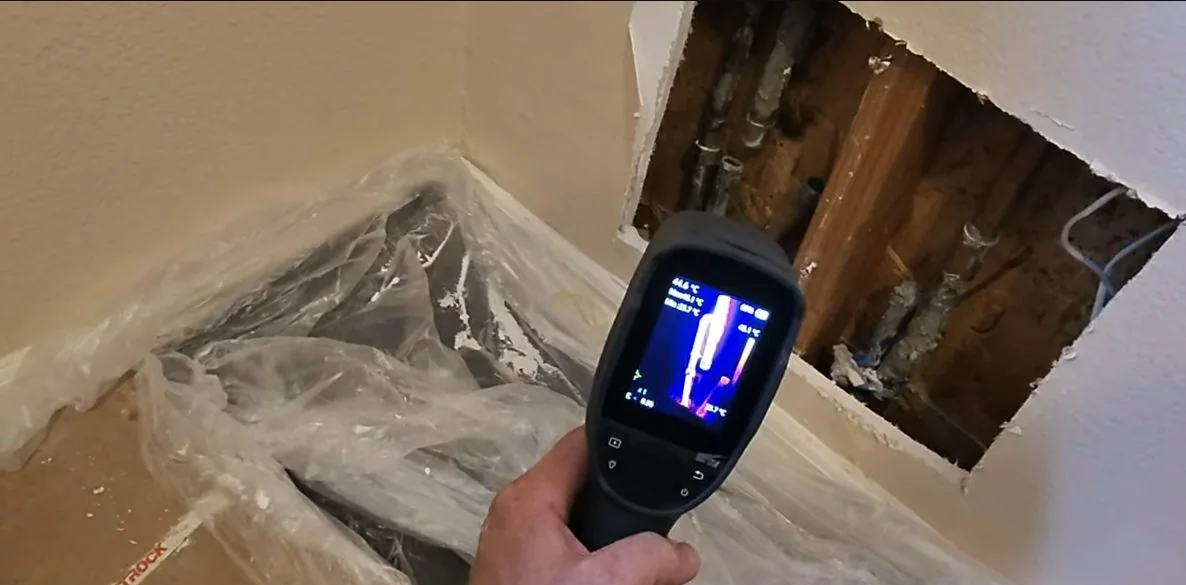
Is it really a leak? The meter test, step by step
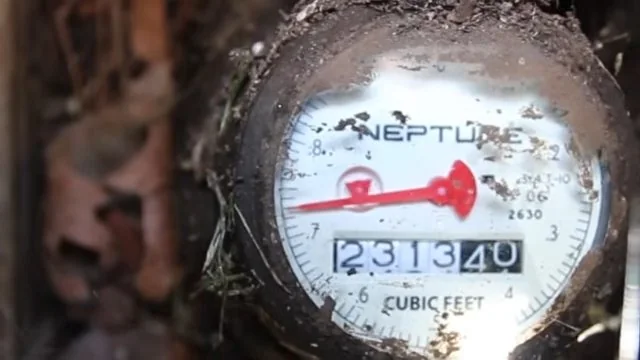
A high bill or the sound of running water does not always mean a leak. The water meter gives you a first answer you can get yourself in about ten minutes.
- Stop all water use. Close taps, turn off the dishwasher and washer, and make sure no one flushes.
- Find the meter. It is usually in a box near the street or the property line. Lift the lid carefully.
- Read the leak indicator. Many meters have a small triangle or wheel that turns when any water moves. If it keeps turning with everything off, water is going somewhere.
- Check the usual suspects. A toilet that leaks silently into the bowl and an irrigation valve that sticks open can both move the dial.
- Close the main shutoff and look again. If the indicator stops, the leak is inside the house. If it keeps turning, the leak is between the meter and the shutoff.
The test has limits. It tells you that water is moving, not where. It also cannot find a leak that is too small to turn the indicator. When the dial moves and the cause is not obvious, ask a plumber to locate the leak and write down where it is, before anyone opens a wall or digs a yard.
Where is the leak: yours, or the city's side of the meter?
The City of Edgewater utility bills water, sewer, stormwater and garbage on one bill, and its customer line is 386-424-2400, extension 4000. A leak on the city's side of the meter, before the water reaches your house, is for the utility to look at. A leak after the meter is generally the property owner's concern.
The meter test tells you which side you are on. If the indicator keeps turning with your main shutoff closed, call the utility. If it stops, the leak is in your house. Ask the utility, too, whether any bill adjustment exists for a leak you have repaired. We did not find a published policy, so do not assume one.
Call Edgewater FL Expert Plumbers, tell us what you found and where the meter is.
Signs of a hidden leak, by where you notice it
| Where | What you notice | What it can mean |
|---|---|---|
| Ceiling | Stain, bubbling paint, a soft spot | A supply or drain line above, an appliance or a roof leak |
| Wall | Damp paint, a musty smell, a sound of running water | A line inside the wall |
| Floor | Warm spots, buckling, a damp area | A line below the floor |
| Yard | A wet or unusually green patch, soft ground | A service line or irrigation leak |
| Bill and meter | A jump in use with no change in habits | A leak somewhere on the property |
A roof or gutter leak is a roofer's job, not a plumber's. If a ceiling stain appears only after rain, start with the roof. A plumber can check whether any water supply lines or drains run above the stain.
How a plumber finds a leak without tearing things open
Finding the leak first saves the most money. The tools you may hear about include these.
- Acoustic listening. Sensitive microphones pick up the sound of water escaping from a pressurized pipe.
- Electronic and thermal tools. Moisture meters and thermal cameras show where a wall or floor is wetter or warmer than its surroundings.
- Pressure testing. The plumber isolates a section of pipe and sees whether it holds pressure.
- Camera inspection. For a drain leak, a camera can show where a line is damaged.
The tools matter less than the answer you get. Ask the plumber to tell you where the leak is, how it was confirmed, and what the repair would involve. Ask for a photo or reading that supports it.
Leaks that people look for in the wrong place
Irrigation and sprinkler lines
A broken sprinkler head or a buried irrigation line can turn the meter without any plumbing fixture in the house failing. Turn off the irrigation system and test again before assuming the leak is in the house.
Water service line
The line from the meter to the house is usually buried. A leak there shows up as a running meter, a wet or soft yard area and often a drop in pressure.
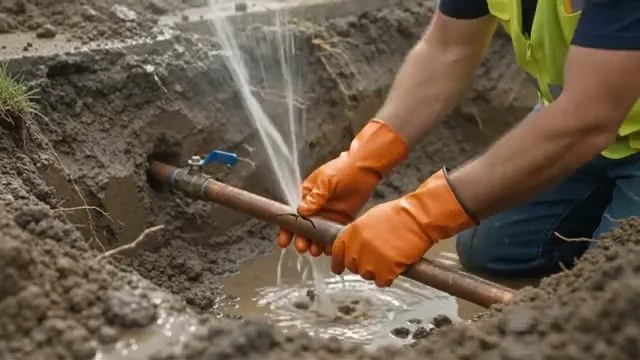
Pinhole leaks in copper
A small pinhole in a copper line can spray into a wall and go unnoticed. We could not verify how common copper is in Edgewater homes, so do not assume. A plumber can tell you what your pipes are made of and how they look.
Gas leak detection: leave first, then find the leak
Natural gas has no smell of its own. The gas company adds an odorant, often described as a rotten egg smell, so that a leak gets noticed. If you smell it, leave the building right away. Do not turn lights on or off, do not use a match or lighter, and call 911 or your gas provider from outside. Stay out until someone tells you it is safe.
Finding where gas is escaping comes after the building is safe. That is the work described here, and it is separate from the water leak tests above.
Signs that point to a gas leak
- A gas smell near the range, water heater, dryer or a gas pipe.
- A hissing sound near a connector, valve or fitting.
- A pilot light that keeps going out.
- A gas bill that rose with no change in how you use gas.
What a plumber checks
Gas leaks inside a house tend to sit at joints and connections. The plumber works through the flexible connectors and shutoff valves at each appliance, the gas supply to the water heater, range and dryer, and any threaded joints or unions along exposed piping. Three methods do most of the work:
- Electronic gas detector. A handheld sensor reads combustible gas near a fitting, and the reading rises as it gets closer to the leak.
- Leak detection solution. A soapy liquid is brushed on a joint, and a leak makes it bubble.
- Pressure test. The gas line is closed off, held at a set pressure and watched on a gauge. A drop means gas is escaping somewhere in that section. Florida's fuel gas code calls for a pressure test on new gas piping, and the same idea finds leaks in existing piping.
After the leak is found
A loose connector or fitting is tightened, repaired or replaced, and the section is tested again before the gas is turned back on. Ask for the test result in writing. Ask the City of Edgewater building department whether the repair needs a permit before work starts, since we could not confirm a gas-specific rule for the city.
Before work starts, ask who holds the Florida license for the gas work, what pressure the line was tested at and for how long. License details are available on request.
What stays with the gas company
The meter and the piping on the street side of it belong to the gas company, and your bill or the company can tell you where its piping ends and yours begins. A propane tank and its regulator belong to the propane supplier. If the smell is outside near the meter or the tank, call the number on your bill or tank from a safe distance.
Roof and pool leaks belong to someone else
This page covers water and gas inside the house. For a swimming pool that loses water, a pool equipment company or the pool's own service provider is the right first call. A plumber can help only with the house supply lines. A roof leak is a roofer's job.
What to ask for in a leak assessment
- Where the leak is, measured or marked, and how it was found.
- Whether the leak is in a supply line, a drain or a fixture.
- What repair would be needed, and what has to be opened to reach it.
- Whether other leaks are likely, given the age and type of pipe.
- A written note of the findings for your insurer or the utility.
If the leak is a sign of a larger problem, such as repeated leaks along a run of old pipe, ask whether repiping when leaks repeat makes more sense than another patch. If water has already soaked materials, drying out water-damaged materials is the next step, and a pipe that has already failed is covered under a pipe that has burst.
Leaks in shops and rentals
A business or rental unit has the extra question of who owns the problem. Read the lease, tell the owner or manager at once and keep the message in writing. A leak in a shared wall may not be the tenant's to repair, and the plumber's written finding is useful evidence of where it started.
Tell us what the meter and the bill are doing
Describe what you found on the meter test and where you see damp spots, and we will help you decide the next step.