
Repiping · Edgewater, FL
Repeated Leaks or Old Polybutylene? Whole-House Repiping in Edgewater, FL and When Replacing Beats Patching
Another leak, another patch, and now you are wondering whether the pipes in the house are the real problem. Repiping replaces the supply lines, and it is worth doing only when repair has stopped working.
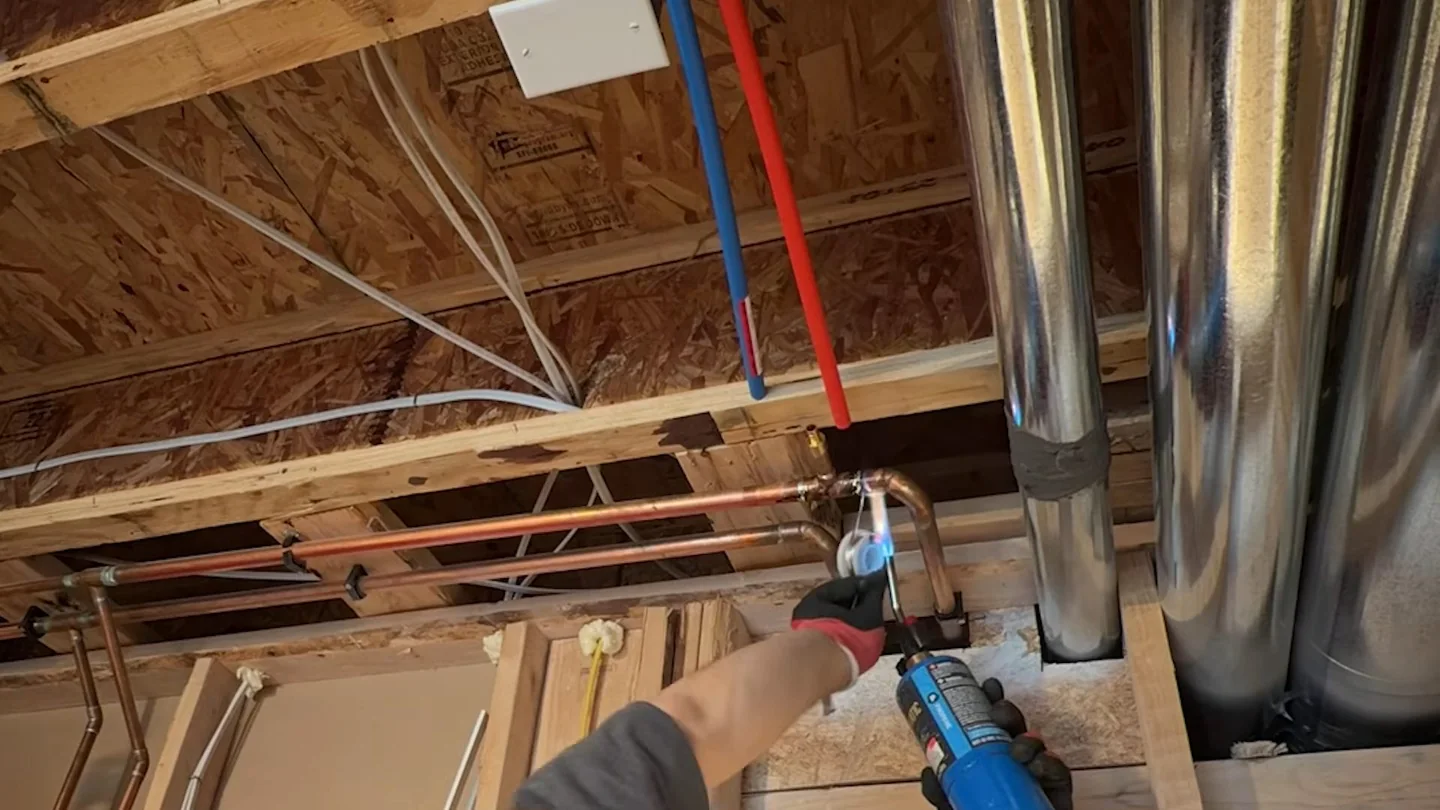
Repair again, or replace the pipes? Four signs to weigh
Repiping is a big decision, and it is only worth it when patching has stopped working. Four signs point toward replacement, and one or two of them alone do not settle it.
- Leaks on different runs. A leak in the kitchen followed by one in a bathroom is a pattern, not bad luck.
- Discolored or metallic water. Rust-colored or off-tasting water from several taps can point to corroding pipe, though other causes exist.
- Low pressure throughout the house. Pipes that are narrowing inside can restrict flow at every tap.
- A known problem material. Polybutylene is the best known, and its check is below.
Ask a plumber to look at the evidence on your pipes, not just the leak in front of them. A plumber who recommends repiping should be able to say why a repair will not hold. For a single leak that shows up once, finding the leak may be all you need.
Is there polybutylene in your walls?
Polybutylene, a gray, blue or black plastic supply pipe, was used in homes from about 1978 to 1995. Its marking is "PB-2110". Census-based figures from aggregator sites put Edgewater's median home year built at about 1988, and roughly 47 percent of homes were built between 1980 and 1999, so some homes fall in that window. We cannot say whether yours has it.
You can check without opening a wall:
- Look at the pipe near the water heater, where it enters the house and by the main shutoff.
- Look for the "PB-2110" marking printed on the pipe.
- Check at an outdoor spigot, a utility room or the garage, where pipe is often visible.
Florida insurers sometimes ask for a four-point inspection that reports polybutylene, and what an insurer decides is up to the insurer. If you find it, ask the plumber what they recommend, and ask your insurer what it requires.
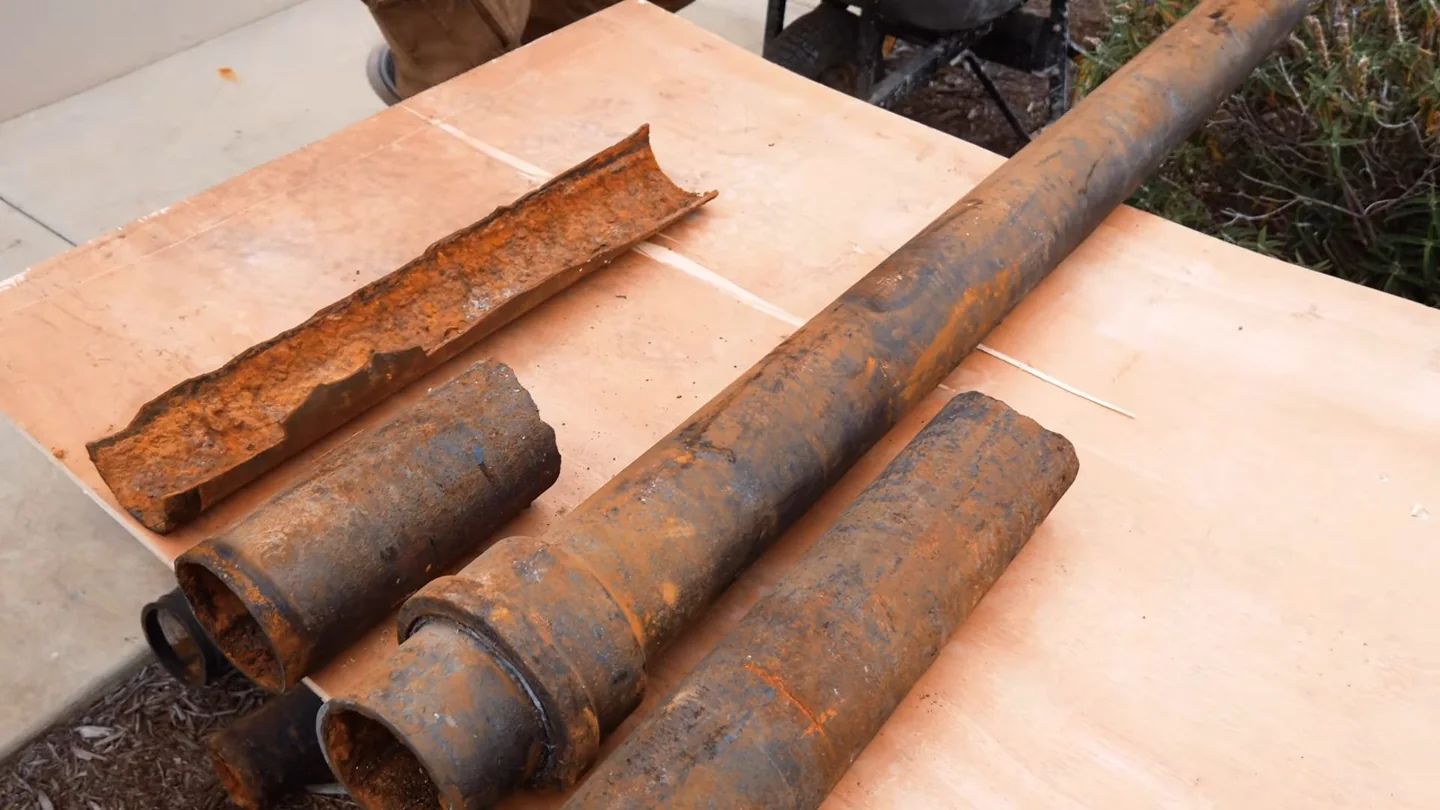
Call Edgewater FL Expert Plumbers, say what has failed and how old the house is.
PEX, copper or CPVC: what each replacement means for your home
| Material | Strengths | Watch for |
|---|---|---|
| PEX | Flexible, fewer joints, often faster to run through walls | Must be protected from sunlight; fittings and manifold type vary |
| Copper | Long track record and durable | Higher material cost; can pinhole in some water conditions |
| CPVC | Rigid plastic, common in newer builds | Can become brittle with age and heat |
The best choice depends on the house, your budget and what the plumber is comfortable installing. Ask which material they recommend, what the fittings are, and what the manufacturer's warranty says.
Water chemistry plays a role, and we do not know the figures. The City of Edgewater says its groundwater is softened in treatment, and its 2024 report gives no hardness number. Ask the city utility at 386-424-2400, extension 4000, for current hardness and for any information on pipe corrosion before you pick copper.
What a repipe involves, day by day
A repipe replaces the water supply lines throughout the house. It does not replace drains. The plumber opens small access holes in walls and ceilings, runs new lines, connects them to fixtures and the main, tests under pressure and then patches the holes. The exact order and the time depend on the house.
- Water is off for part of each day. Ask for a schedule and plan for it.
- Walls and ceilings are opened. Ask who patches and paints, and what is included.
- Furniture and belongings need to be moved from work areas.
- A pressure test is run before any wall is closed.
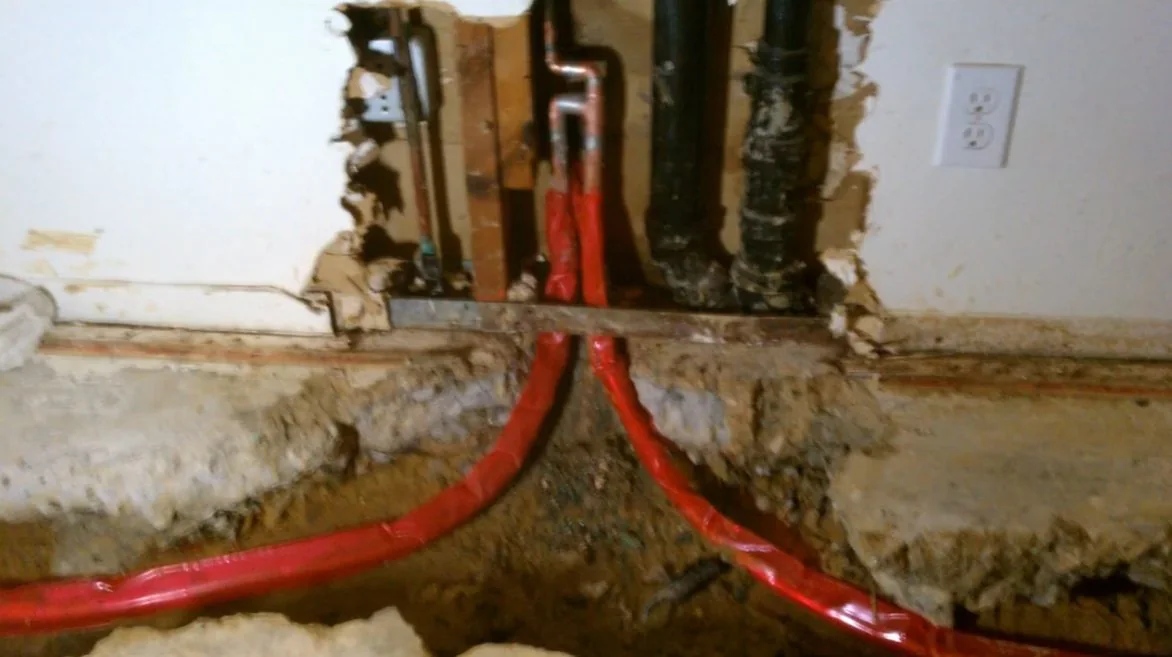
Living in the house during a repipe
Ask how the plumber handles the days the water is off. Some plan to restore water each evening, and some do not. Fill a few containers for drinking and flushing, and plan showers elsewhere if the water will be off overnight. Keep pets and children away from work areas, and ask where tools and materials will be stored.
Tell your insurer about the work. A repipe may change what your policy requires or what you can claim, and a record of the new pipe helps in any future claim.
Repiping the whole house or only one failing run
If the failures are limited to one run, replacing that run may be enough. If the pipe is failing everywhere, replacing a small part now and another later costs more in the end, because walls are opened twice. Ask the plumber to give you both options, in writing, and to say why.
Permits, licensing and inspections
The City of Edgewater's 2019 fee schedule lists an "all other plumbing permits" item for additions and alterations. We found no repipe-specific item, so call the city at 386-424-2400 to ask whether your repipe needs a permit and an inspection, and who pulls it.
Florida's DBPR says plumbing work requires licensing and permitting, and that consumers should verify a contractor's license before hiring. You can look it up at myfloridalicense.com or by calling 850-487-1395.
What a repiping quote should include
- The material, the size of the lines and the fittings.
- The scope: which fixtures and which runs.
- Wall and ceiling repair, and who does it.
- The permit and the inspection.
- The schedule and how long the water will be off.
- The warranty on the pipe and on the labor, in writing.
Prices depend on the house, the material and the access, so we do not state one. See what moves a repiping price for how to compare quotes.
When a leak is already causing damage
If a failing line has already wet a wall or floor, deal with the water first. A fixing a burst line is the immediate step, and drying wet walls is covered under drying opened walls. A repipe can be planned afterward, once the damage is under control.
If the leaks are under a concrete floor, the repair options are different. See rerouting lines from a slab for the choices.
Questions to ask before you sign
- Why is repiping better than another repair for my house?
- Which material do you recommend and why?
- What will be opened, and who closes it up?
- How many days will the water be off, and for how long each day?
- What permit and inspection apply?
Describe the leaks and the age of the house
Tell us what has failed, how often and when the house was built.